Overview
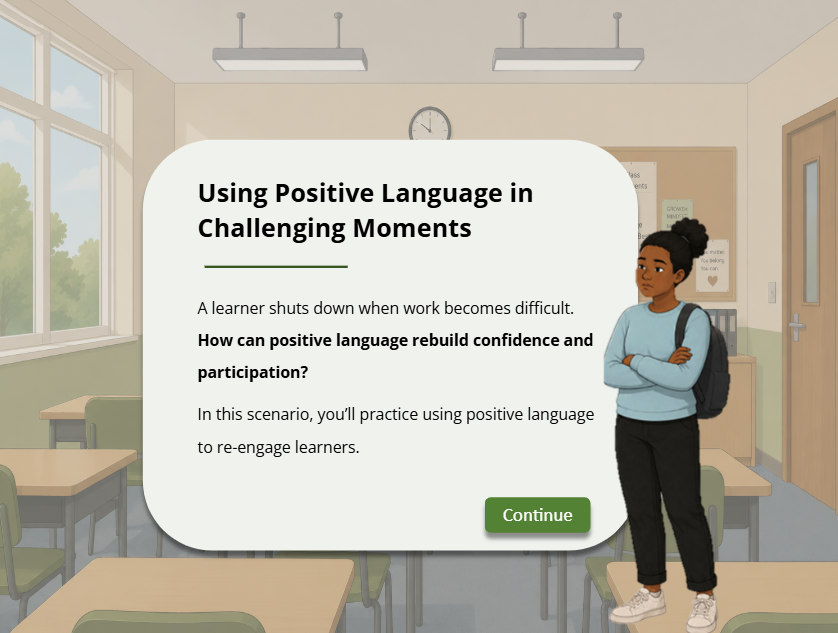
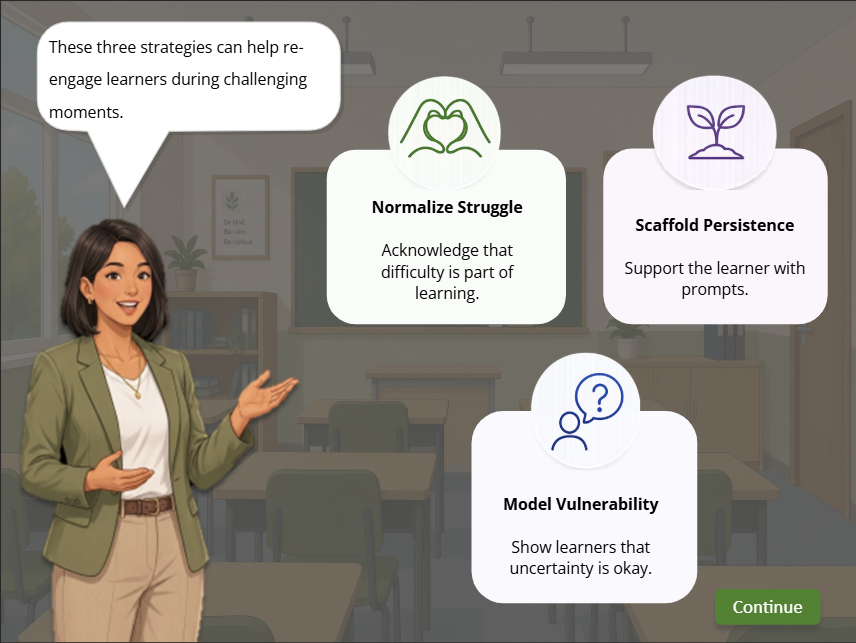
This scenario-based digital CPD helps early career teachers use positive language to re-engage hesitant and disengaged learners. Learners work through a realistic classroom scenario, make decisions about how to respond to a struggling student, and receive coaching feedback based on the consequences of their choices. The experience promotes reflection and introduces three key strategies for supporting learner confidence and participation: Normalising Struggle, Scaffolding Persistence, and Modelling Vulnerability.
The project was adapted from an instructor-led CPD session developed in response to classroom observations and mentoring feedback relating to learner engagement.
Audience: Early Career Teachers (ECTs), trainee teachers, and educators seeking to develop positive language strategies for supporting learner engagement.
Responsibilities: Instructional Design, Scenario-Based Learning Design, eLearning Development, Visual Design, Quality Assurance
Tools Used: Articulate Storyline 360, Microsoft PowerPoint, ChatGPT, Canva
The Problem
Through classroom observations and mentoring conversations, I identified a recurring challenge when supporting hesitant and disengaged learners. While teachers often use positive language strategies intuitively, opportunities to explicitly reflect on these approaches and understand their impact on learner confidence are often limited. In particular, learners who are struggling may respond negatively to well-intentioned prompts if they feel embarrassed, overwhelmed, or unsure how to re-engage with a task. This created a need for a learning experience that would help educators recognise effective responses and practise applying positive language in realistic classroom situations.
The Solution
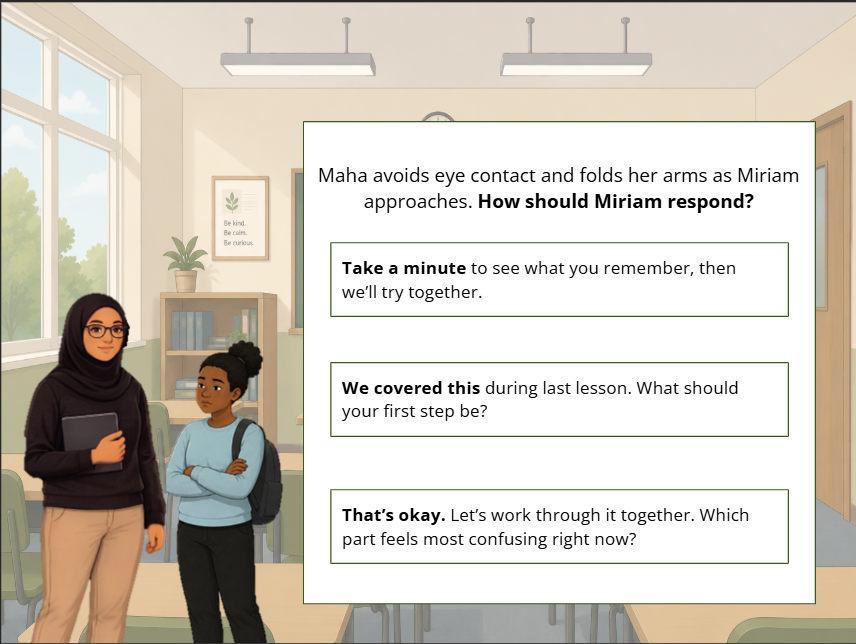
To address this challenge, I transformed an instructor-led CPD session into a scenario-based digital learning experience. Learners follow a realistic classroom scenario involving an early career teacher and a disengaged student, making decisions about how to respond in the moment. Instead of receiving simple correct or incorrect feedback, learners experience the consequences of their choices, explore the student's perspective, and receive coaching from a mentor character. The experience concludes by introducing three positive language strategies: Normalising Struggle, Scaffolding Persistence, and Modelling Vulnerability. Together, these strategies provide educators with practical approaches for building learner confidence, supporting participation, and encouraging re-engagement with learning.
My Process
Analysis
This project originated from my own classroom practice and an instructor-led CPD session I delivered in Autumn 2025. Through lesson observations and mentoring conversations, I identified the importance of positive language in supporting hesitant and disengaged learners. I also reflected on my experience working with a Year 10 Sociology class, where the use of supportive language helped improve learner confidence and participation over time.
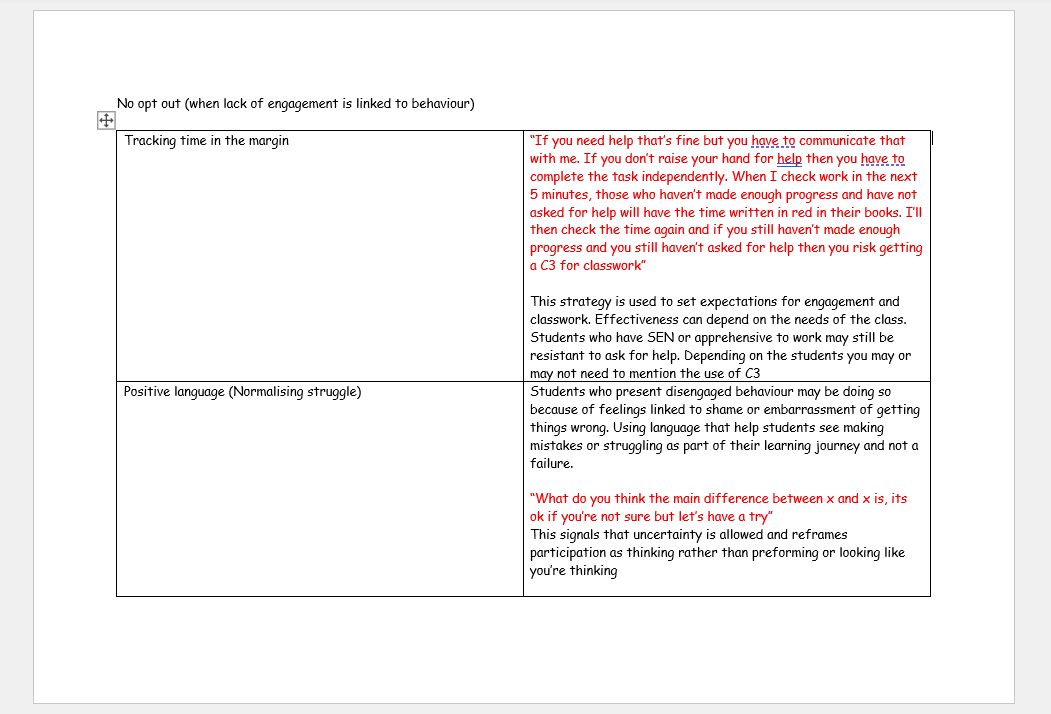
Original CPD notes exploring positive language strategies
Prototype 1
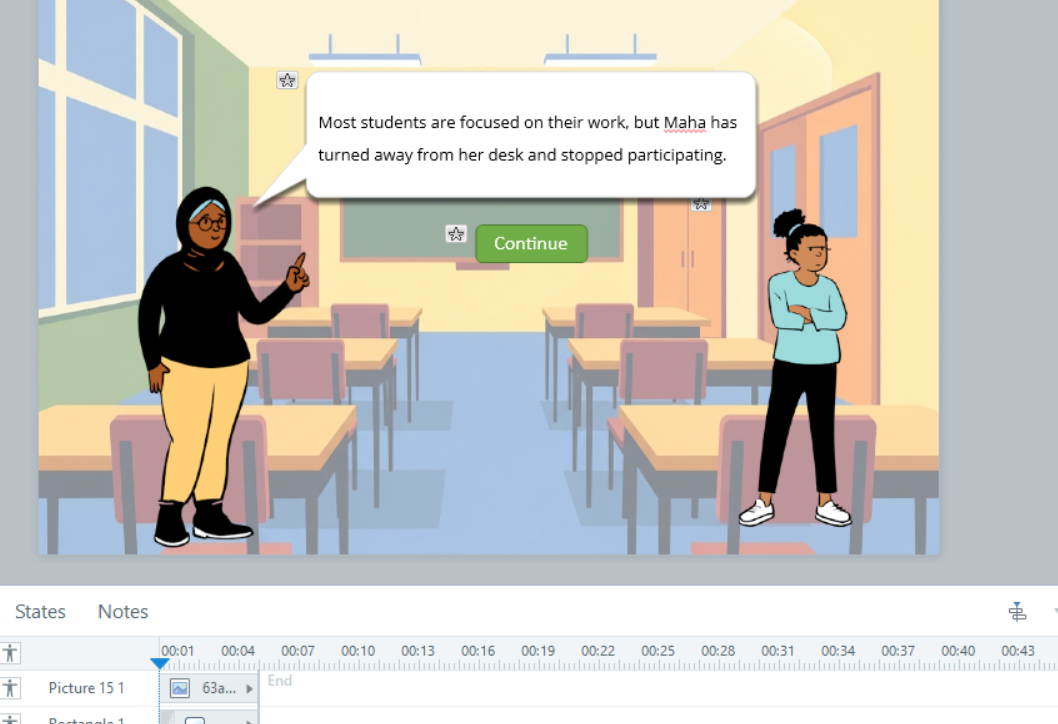
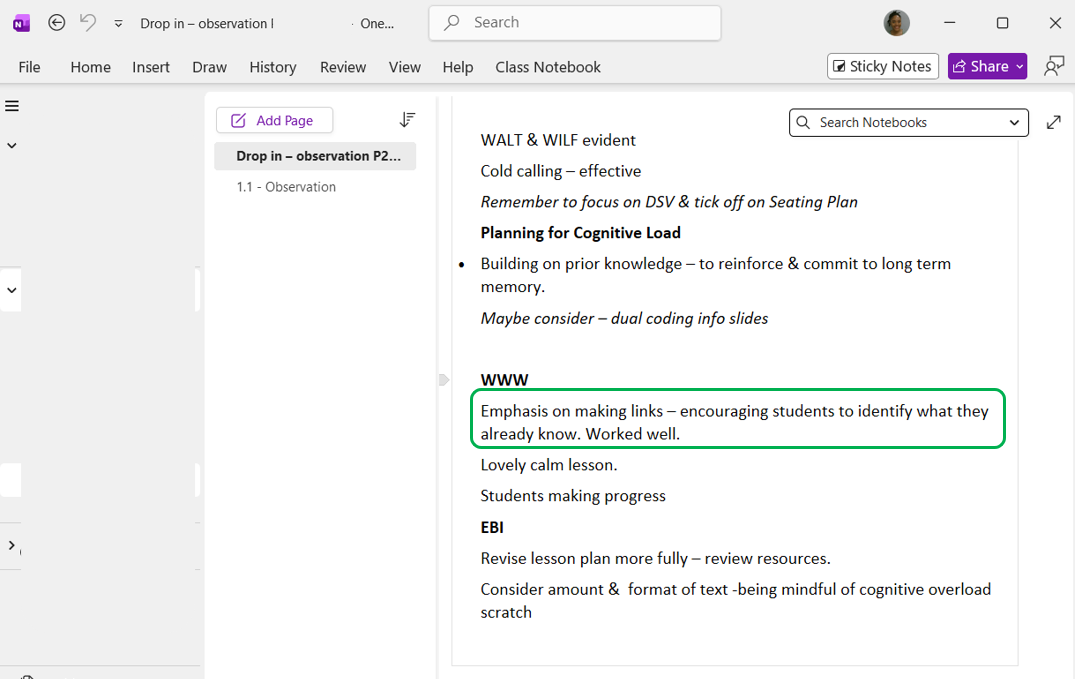
Lesson observation feedback highlighting learner engagement techniques
Design
To transform the instructor-led CPD into a digital learning experience, I designed a scenario-based learning activity centred around a realistic classroom interaction between an early career teacher and a disengaged learner. Rather than presenting information about positive language strategies at the beginning of the course, I wanted learners to experience the scenario first and reflect on the consequences of different responses before being introduced to the underlying concepts.
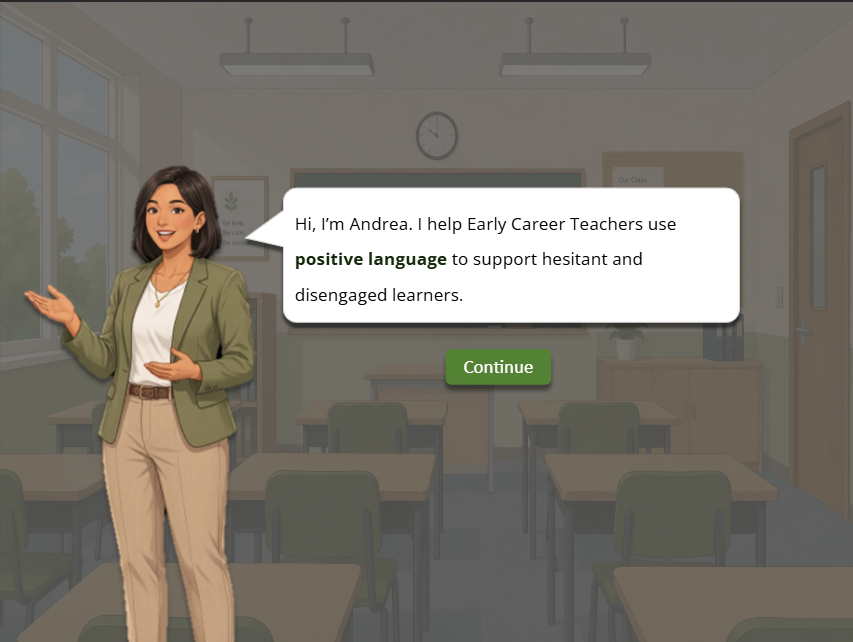
I mapped a branching pathway that allowed learners to explore multiple responses to the same classroom challenge. Each decision point was designed to encourage reflection on how language can influence learner confidence, engagement, and participation. I also introduced Andrea, a mentor character who provides coaching feedback throughout the experience, creating a learning environment that felt familiar and authentic to early career teachers.
To support a more child-centred perspective, I incorporated learner perspective screens that reveal Maha's thoughts and feelings after key interactions. This design decision encourages educators to consider the underlying causes of disengagement and reflect on how their responses may be experienced by learners.
Development
Following the design phase, I created several early prototypes in PowerPoint to test the structure, visual layout, and learner interactions before moving into Articulate Storyline 360. This allowed me to refine the learner journey and make adjustments to the scenario flow before full development began.
The final experience was developed in Storyline 360 as a branching scenario featuring decision points, learner perspective screens, coaching feedback, and strategy summaries. I used variables, triggers, and layered interactions to create a guided learning experience that encouraged reflection while maintaining a clear and intuitive user experience.
Throughout development, I focused on creating a cohesive visual identity and ensuring that interactions supported the learning objectives rather than distracting from them. Regular reviews and testing helped refine the flow of the scenario, feedback screens, and overall learner experience.
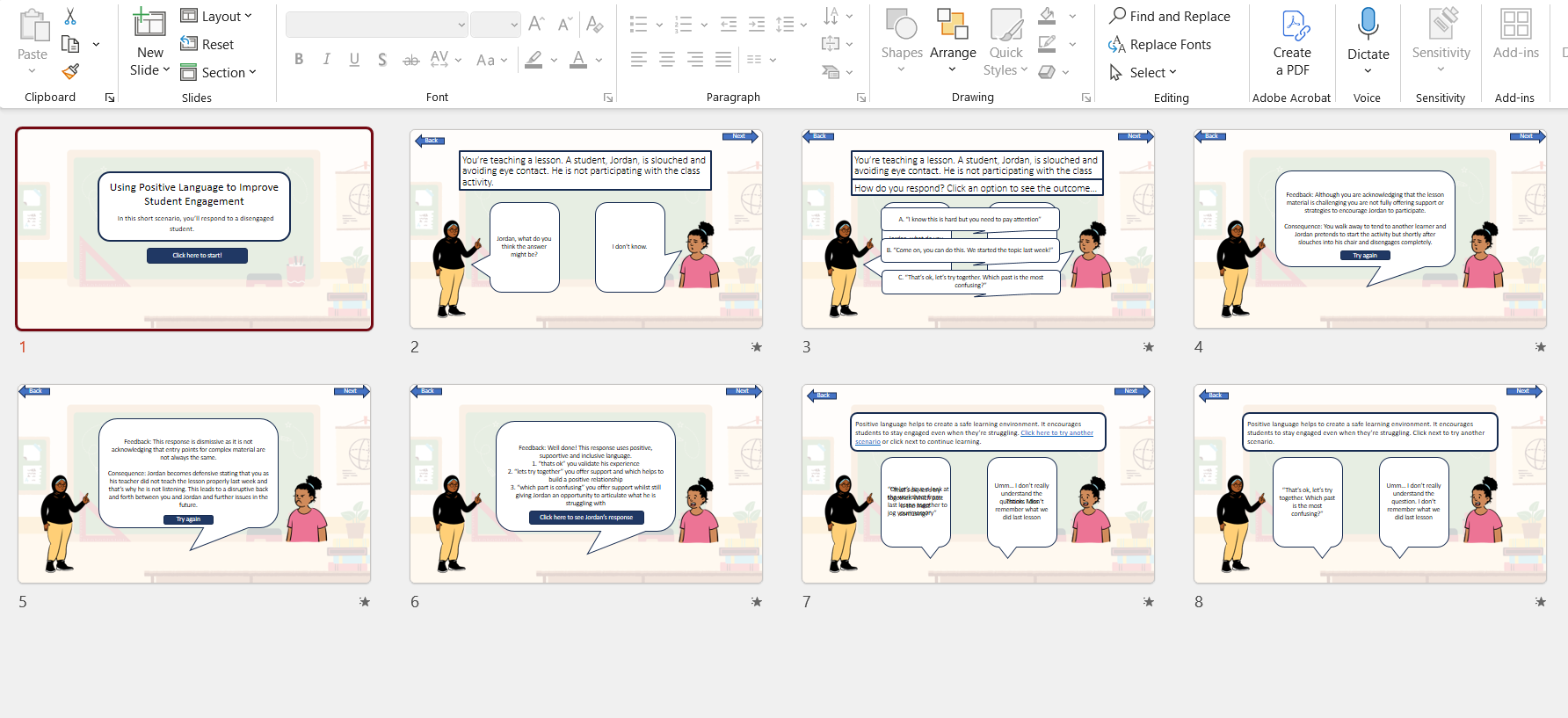
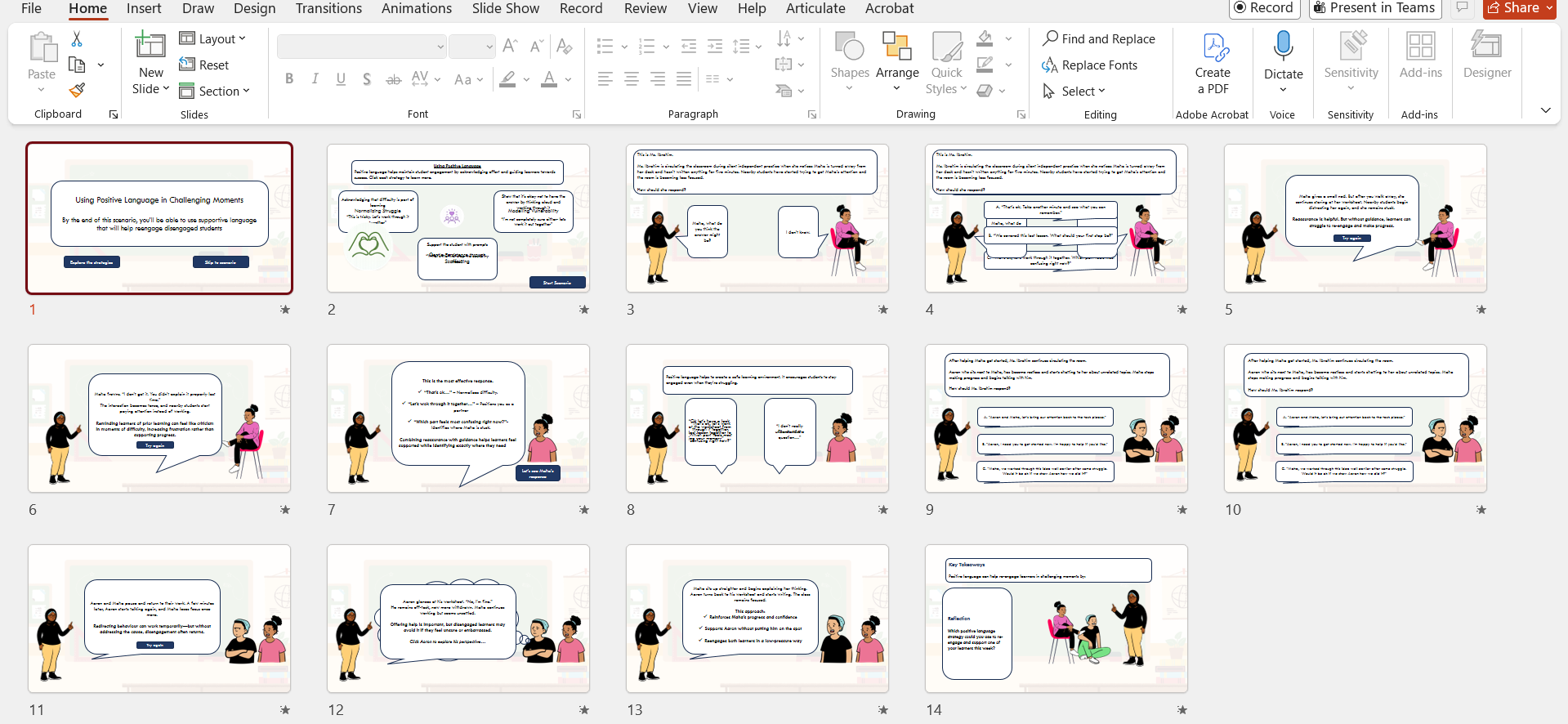
Prototype 2
Iteration & Refinement
Throughout development, I reviewed and refined both the instructional and visual design of the project to ensure that each element supported the learning objectives and created a cohesive learner experience.
Refining the Scenario Structure
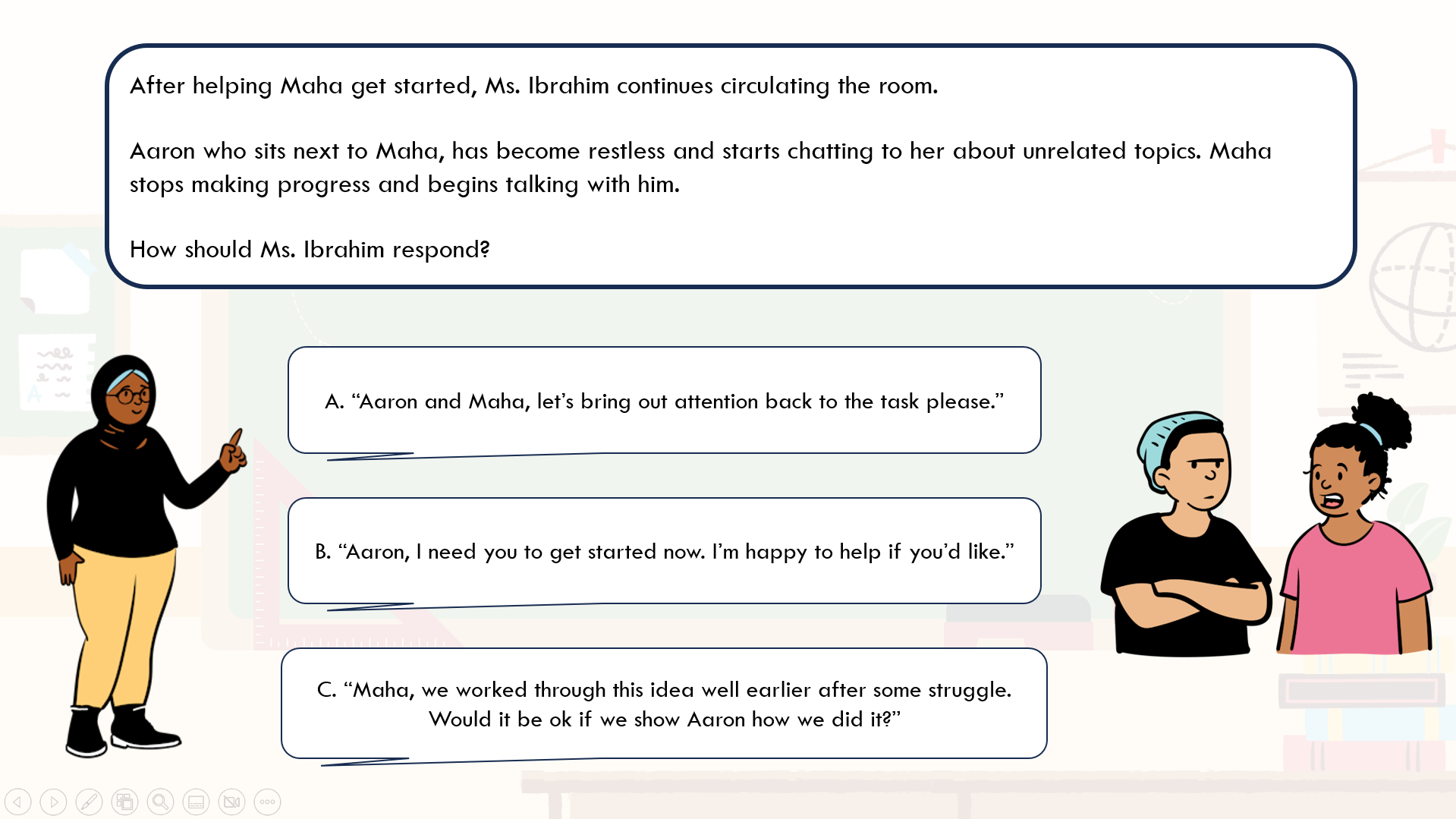
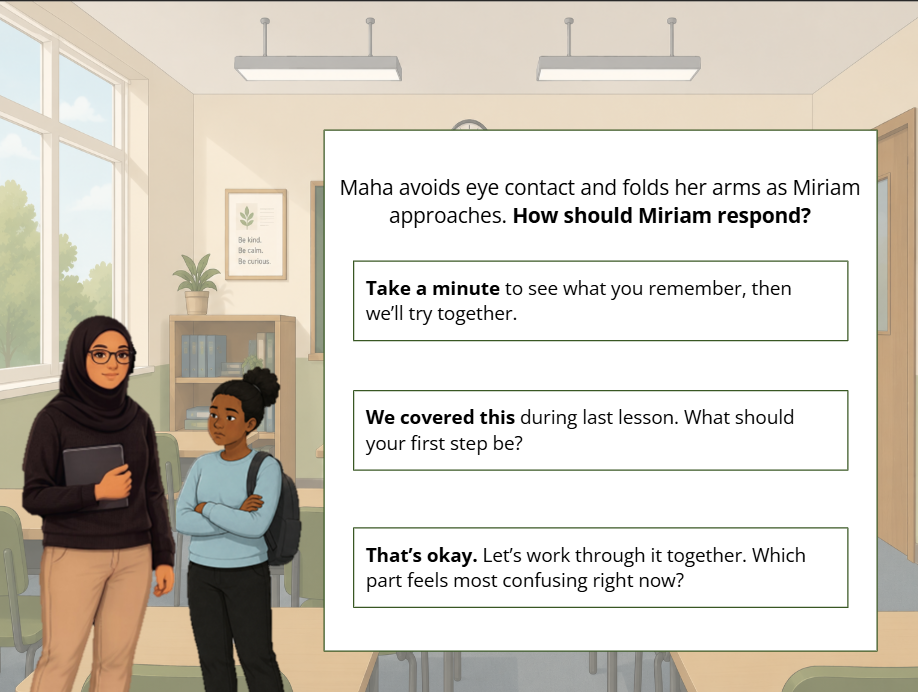
Early prototypes explored a more complex classroom scenario involving an additional student alongside Maha. While this expanded the narrative, it diverted attention away from the core learning objective of using positive language to support a hesitant and disengaged learner. After reviewing the learner journey, I simplified the scenario and refocused the experience on the interaction between Miriam and Maha. This helped maintain instructional focus and reduce unnecessary complexity

Strengthening Emotional Storytelling
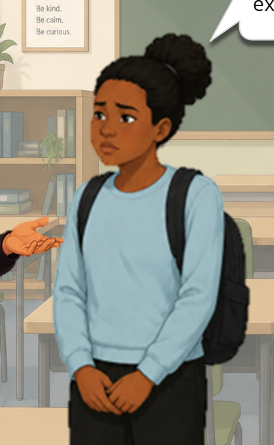
A key objective of the project was helping educators recognise how language choices can influence learner confidence and engagement. To support this, I refined character expressions and visual cues throughout the scenario to clearly communicate changes in Maha's emotional state.
Learners see Maha move from disengagement and frustration to vulnerability and eventual re-engagement. Miriam's expressions were also refined to reinforce moments of uncertainty, support, and encouragement. These visual changes help learners connect emotionally with the scenario and better understand the impact of different teacher responses.


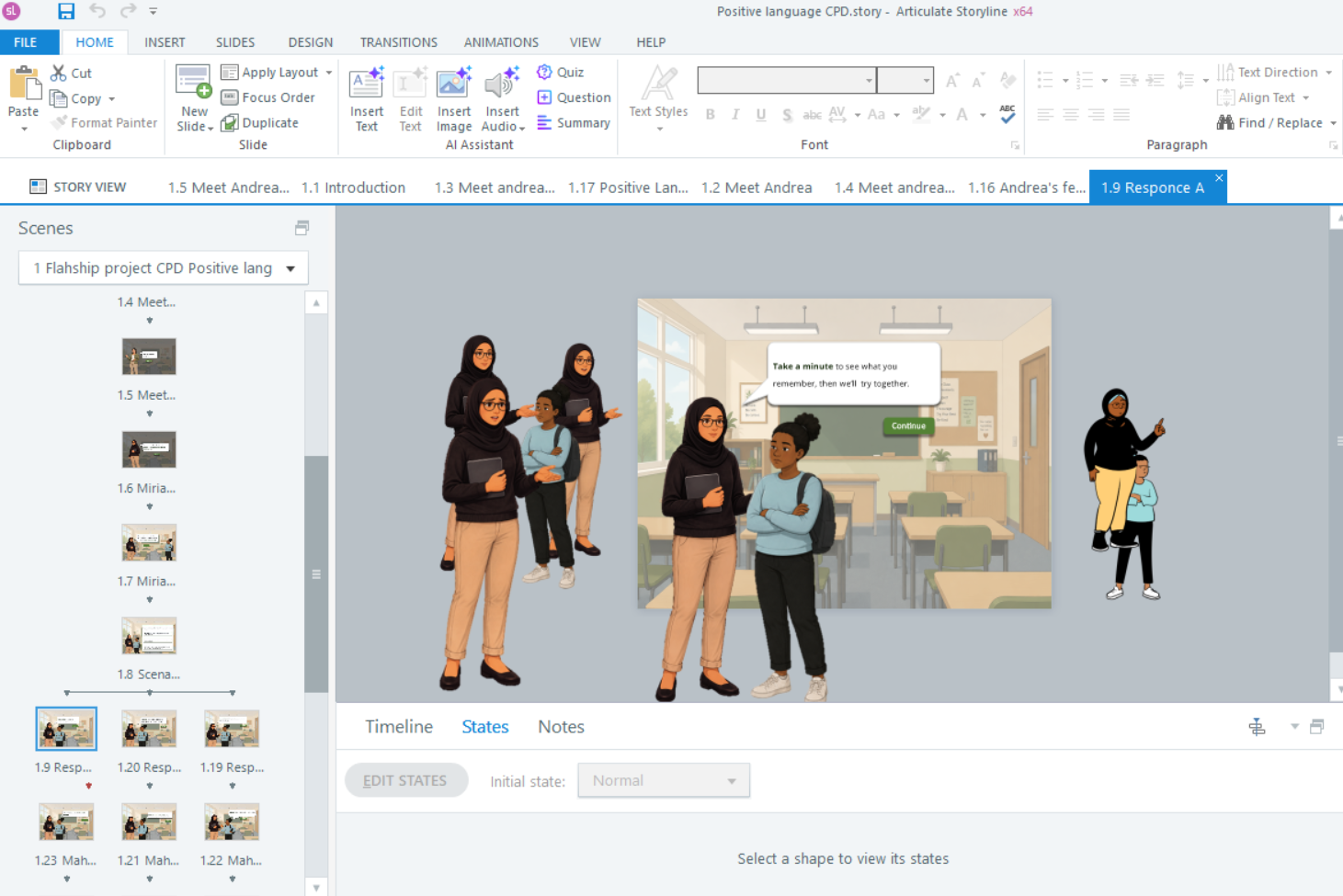
Storyline Development
Storyline Development Prototype 1
Project Walkthrough
Watch a short walkthrough of the learning experience and learn more about the instructional design decisions behind the project. The video explores how scenario-based learning, branching decision points, reflective coaching feedback, and learner perspective screens were used to encourage reflection and help educators develop positive language strategies for supporting hesitant and disengaged learners.
Key Design Decisions
Learning Through Reflection Before Terminology
Rather than introducing the three positive language strategies at the beginning of the course, I chose to embed them within a realistic classroom scenario and reveal them only after learners had experienced the consequences of different responses.
This decision was informed by the target audience. Early career teachers often use strategies such as normalising struggle, scaffolding persistence, and modelling vulnerability in their day-to-day practice, even if they do not explicitly recognise or name them. Rather than teaching entirely new concepts, the learning experience encourages educators to reflect on existing practice and become more intentional in their use of positive language.
By allowing learners to engage with the scenario first, the course prioritises application and reflection before introducing terminology. This approach aligns with adult learning principles by building on prior experience and connecting new learning to authentic professional contexts.
Using Learner Perspective to Challenge Assumptions
Following ineffective responses, learners are shown Maha's perspective before receiving coaching feedback. Rather than immediately explaining why a response was unsuccessful, the experience first invites learners to consider the situation from the student's point of view.
This decision was informed by both my classroom practice and previous delivery of the instructor-led CPD. During training sessions, I encourage educators to explore the wide range of factors that can contribute to learner disengagement, including embarrassment, overstimulation, anxiety, and language or communication barriers. These underlying causes are not always visible to the teacher in the moment.
By revealing Maha's perspective, the experience encourages learners to challenge assumptions about disengaged behaviour and consider what may be happening beneath the surface. This approach aligns with child-centred and trauma-informed approaches to teaching, which emphasise understanding learner needs before responding to behaviour.
Coaching Feedback Through a Mentor Character
Rather than using traditional correct and incorrect feedback screens, I introduced Andrea as a mentor figure who provides reflective coaching throughout the experience.
This decision was informed by the target audience. Early career teachers and trainee teachers are accustomed to receiving support from mentors, instructional coaches, and ITT leads as part of their professional development. By incorporating a familiar mentoring dynamic, I aimed to create an experience that felt authentic to the audience's day-to-day reality.
Andrea's feedback encourages reflection rather than evaluation. Instead of simply telling learners whether a response was right or wrong, she prompts them to consider the impact of their language choices and the learner experience. This approach helps position the experience as professional development rather than assessment.
Using a mentor character also creates a stronger connection between the learner and Miriam, allowing users to identify with the challenges faced by an early career teacher while receiving guidance in a familiar and supportive format.
Visual Storytelling Through Character Iteration
Early versions of the project used flatter character illustrations. While functional, these visuals limited the ability to communicate emotional changes throughout the scenario. I iteratively refined the artwork to create more realistic character expressions that reflected disengagement, frustration, vulnerability, and re-engagement. This helped reinforce the emotional journey of the scenario and supported learners in recognising the impact of different teacher responses.
Reflection
Development followed an iterative approach. Early versions of the project were prototyped in PowerPoint before being developed in Storyline. Through multiple rounds of review and refinement, I adjusted the visual design, character artwork, and interaction patterns to create a more cohesive and engaging learning experience.